
Arrest History in Clarke County
Athens-Clarke County Police, the Clarke County Sheriff, Winterville Police, UGA Police, Georgia State Patrol, and other agencies can create arrest or incident records. The sheriff creates a separate jail booking whenever a person enters Clarke County Jail. One event can therefore produce an agency narrative, a sheriff booking, a court case, and a fingerprint-linked GCIC arrest cycle.
Those records answer different questions. A booking proves that intake occurred, not that prosecutors filed the listed charge or that a court found guilt. The seven-day report is a narrow custody view, not a complete Clarke County arrest history.
Clarke's 24-Hour-Delayed Arrest Feed
The recent-arrest gateway requires a disclaimer acknowledgment. New entries appear after a stated 24-hour delay, refresh every 15 minutes, and remain online for seven days. A same-day or older absence proves little.
The official seven-day arrests page shows the acceptance screen.
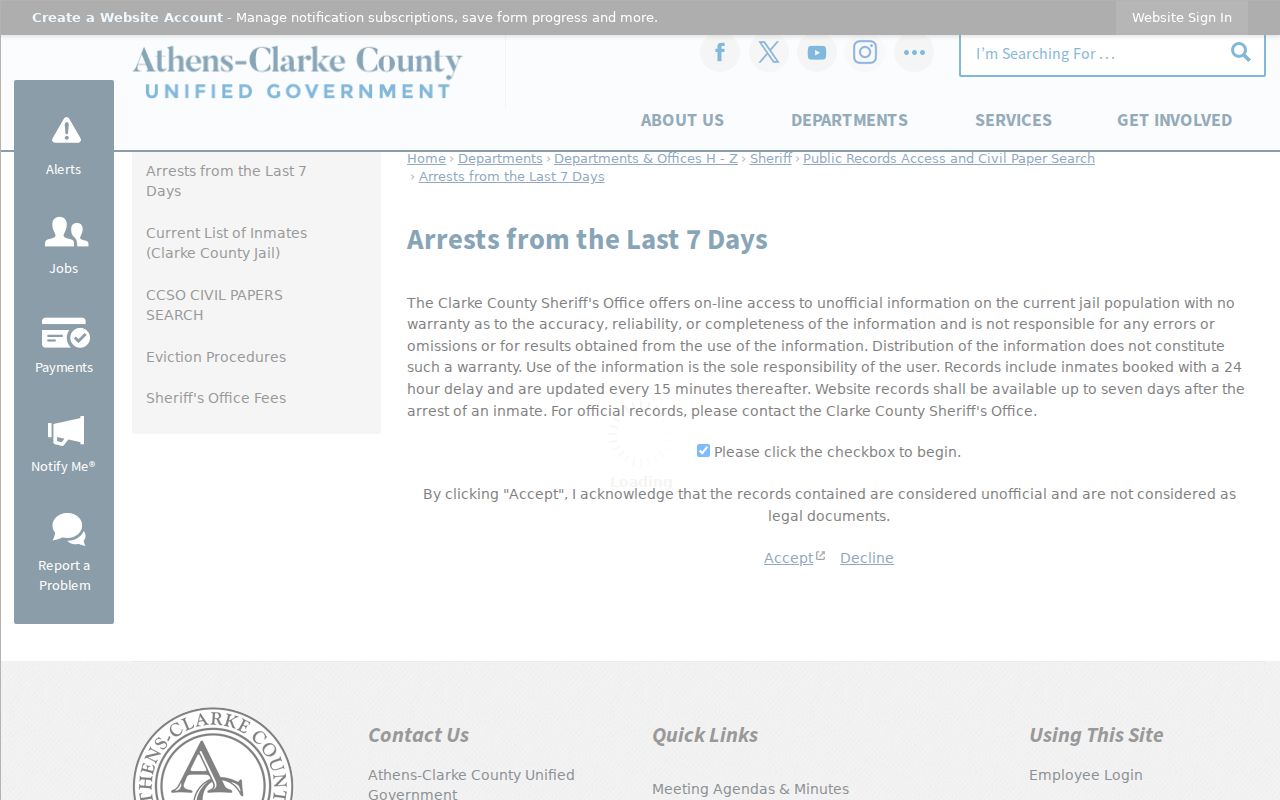
The disclaimer and delay must be weighed before a reader draws any conclusion from the report.
How to Look Up Clarke County Arrests
Follow a record from booking to agency report, court outcome, and any later state custody. Keep the MID number, police case number, arresting-agency label, and court jurisdiction together.
- Check the sheriff's seven-day report, then the current-inmate list if custody may continue.
- Request the official booking from the sheriff at sheriff_orr@accgov.com or 762-400-8013.
- Request the arrest narrative from its creator, such as Police/Corrections through GovQA.
- Match the entry to Superior, State, Magistrate, or Municipal Court for the filed charge and outcome.
- For self-review, use a local GCIC record channel; after a state transfer, use GDC Find an Offender.
The county open-records directory separates the Police/Corrections, sheriff, and general-government custodians.
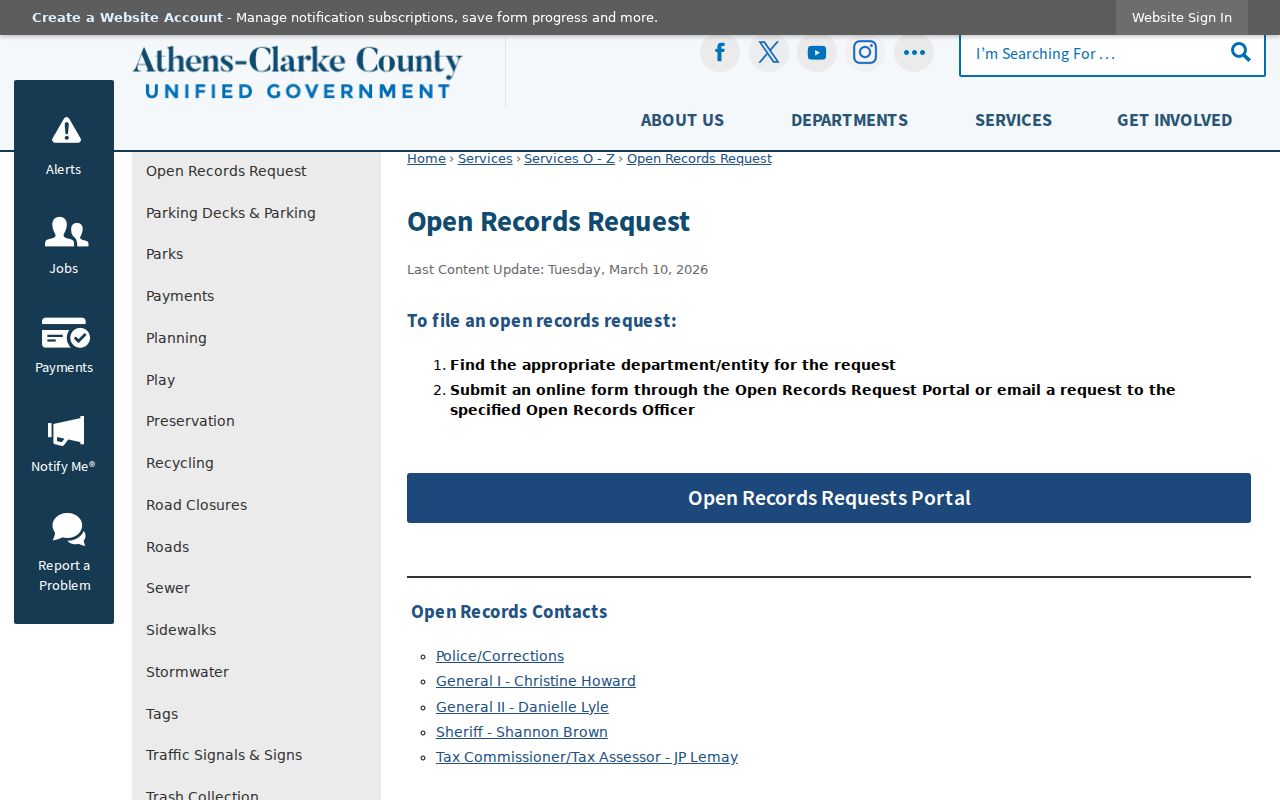
Choosing the creator prevents a jail request from being sent to the police custodian.
ACCPD Report and Clarke Booking
An ACCPD arrest usually creates a police case number for the incident and a sheriff MID number for custody. Request the police narrative through GovQA at 3035 Lexington Road or 762-400-7000. Request the booking from the sheriff separately. Winterville Police, UGA Police, and state agencies keep the reports they create even when Clarke County Jail handles booking.
What an Arrest Record Shows
The recent report lists MID number, booking time, name, year of birth, race, sex, arresting agency, release time, charge, crime type, court jurisdiction, bonding company, bond amount, warrant number, and police case number. The inspected public reports showed no photos.
| Booking Number | MID number links the person to local custody. |
|---|---|
| Booking Date & Time | Shows when intake was recorded. |
| Arresting Agency | Routes the request for the underlying report. |
| Charges | Booking allegation; the current list displays first charge only. |
| Bond | Amount and bonding company are a point-in-time snapshot. |
| Photo Policy | No photo appeared in the inspected recent or current reports. |
| Release Status | Release time may appear but does not show disposition. |
First Charge Only in Clarke Jail
The current-prisoner list expressly says it displays the first charge only. Its fields include MID, booking date, charge, bond, case number, police case number, and year of birth. One displayed charge does not mean one total count.
The Clarke County Jail page routes readers to both public reports.
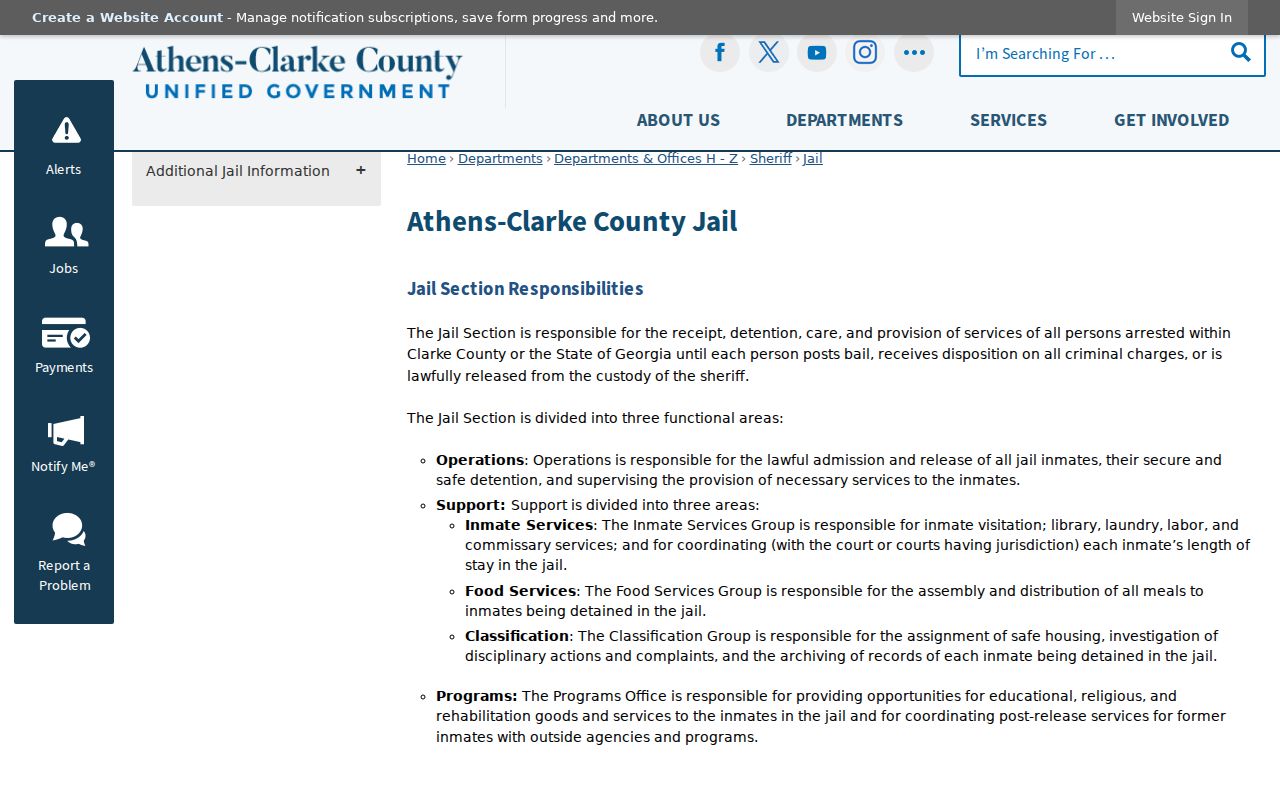
An official booking request is the sound fallback when the roster cannot answer a charge question.
Recent Arrests and Booking Logs
The seven-day report tracks recent bookings after its delay. The current list tracks people still held but displays only the first charge. Both are unofficial online data. Contact the Clarke County Sheriff's Office for an official copy.
Older entries roll off, and released people leave the current list. Search the court clerk for a filed case or make a narrow Georgia Open Records Act request naming the agency, date range, booking number, record type, and desired format. Agencies generally respond within three business days by producing accessible records or explaining timing and estimated cost.
Booking and Review at Lexington Road
Jail intake creates identity, fingerprint, photograph, property, account, charge, and housing records. A person unable to post bail is brought before a magistrate within 72 hours, according to the jail. Classification considers behavior and potential violence or disruption. None is a finding of guilt.
The official inmate-services page documents GED preparation, UGA-linked INSIDE/OUT, and Future Foundations.
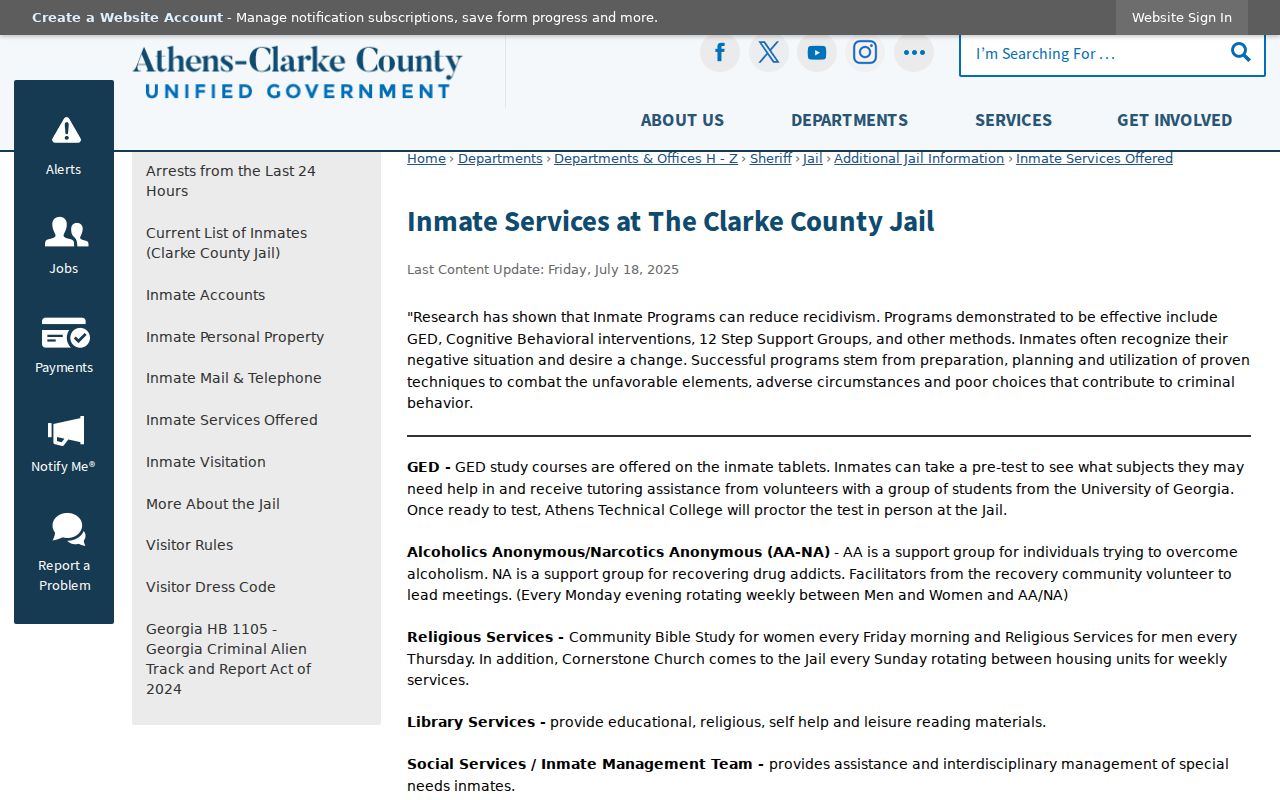
Those programs add local custody context without changing what the booking entry proves.
Arrests vs Convictions
Arresting agencies and the jail document allegations and custody. Courts document filed charges and outcomes. GCIC assembles fingerprint-linked arrest cycles and reported dispositions, but delayed reporting can leave an outcome incomplete. Compare a certified clerk disposition with one's GCIC inspection to correct a missing result.
| Arrest Record | Conviction Record |
|---|---|
| Created by agency and jail | Entered by the court |
| Shows arrest or booking occurred | Shows guilt by plea, verdict, and judgment |
| Lives with agency and sheriff | Lives with clerk and may be reported to GCIC |
| May be followed by no filing or dismissal | May lead to sentence, appeal, restriction, or sealing |
Note: An arrest is not proof of guilt; filed charges may change, and cases can end in dismissal or acquittal.
After Clarke County Custody Ends
A person sentenced to state custody may appear in GDC Find an Offender after leaving the county jail. The locator can use name, GDC ID, case number, and exposed demographic filters. It covers the sentenced GDC population, not the current county jail.
The GDC offender query is the official state-custody channel.
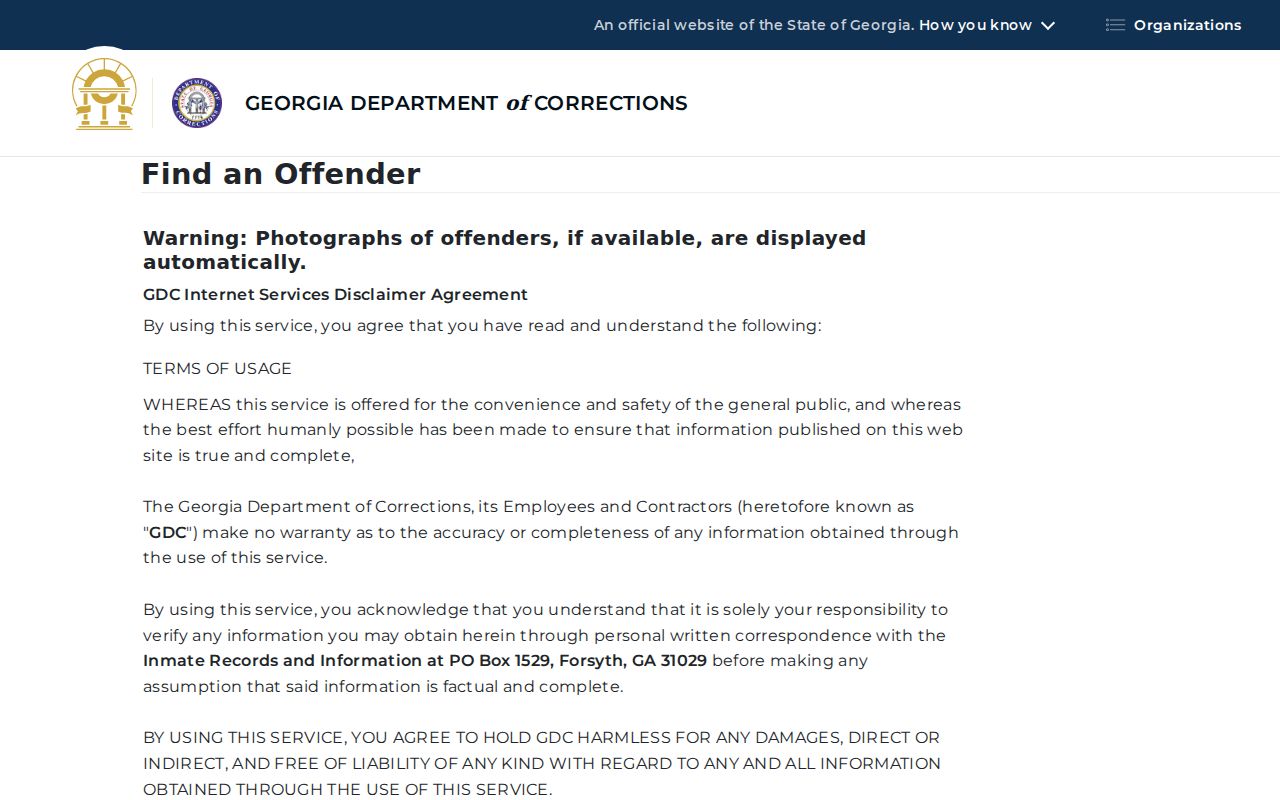
For the final charge result, return to the Clarke County criminal court case rather than reading custody as disposition.
Requesting an Official Clarke Booking
The sheriff's online reports call their information unofficial. For an official copy, identify the person, approximate booking date, MID number when known, arresting agency, and preferred format. Ask for an estimate if search, retrieval, redaction, or copy costs may be substantial. Inspection can be a useful alternative when a copy is not needed.
A police incident report is a second request. It may contain time, location, officers, alleged offense, probable-cause narrative, witnesses, and evidence references, but active-investigation material, confidential informant details, juvenile information, medical data, and protected identities may be withheld. A sheriff booking request cannot produce the full police narrative, and GovQA cannot produce the clerk's complete litigation file.
Match Clarke Arrest Identifiers Carefully
A shared name and approximate birth year do not establish identity. Use the MID number, booking time, arresting agency, police case number, charge, court jurisdiction, and year of birth together. The warrant number can connect an executed warrant to a booking, but the seven-day report is not an active-warrant database.
No verified comprehensive public Clarke criminal-warrant search exists. Contact the issuing court for a possible bench or case warrant and the sheriff for service or official confirmation. Magistrate handles arrest-warrant and preliminary matters; Municipal handles city failure-to-appear issues; Superior and State clerks handle case-related warrants. Sealed and juvenile matters may not be disclosed.
Georgia Felon Search is not a substitute for this arrest trail. It is a paid possible-match search of reported in-state felony convictions, not a fingerprint-verified list of every Clarke County arrest. For one's own fuller Georgia history, most sheriff or police departments can provide a GCIC copy under their current identity, fee, and appointment rules. GCIC also offers appointment-only personal inspections at its Decatur lobby.
If a clerk disposition is missing from that history, obtain a certified copy and contact the agency that submitted the arrest cycle or GCIC. This comparison can distinguish a reporting delay from a case that truly remains open.