
How to Check Criminal History in Athens
Start at the source closest to the event. Athens police reports, sheriff booking records, Municipal Court citations, and Superior or State Court files are separate public-record channels. A name alone is weak proof. Use the incident date, street, report number, citation number, or court case number whenever one is known.
- Ask ACCPD for the incident or arrest report and give the police case number if available.
- Check the Clarke sheriff's seven-day booking report or current inmate list for custody data.
- Contact Athens-Clarke Municipal Court for city ordinance and traffic matters.
- Move to Clarke Superior Court for felonies or State Court for stand-alone misdemeanors.
- Use Georgia Felon Search only as a statewide possible-match felony check, not as a full local file.
The broader Clarke County criminal history overview explains the county and state layers without repeating them here.
File Athens Police Records in GovQA
The ACCPD Police and Corrections request page routes requests through GovQA and publishes the records address at 3035 Lexington Road. A useful request names the record category, report number, incident date, street location, involved people, and the part of the file sought. The paper request inventory includes Criminal Incident, Vehicle Accident, and Other choices. Ask for an electronic copy and a cost estimate when the file may be large.
The portal may require account and contact information. Privileged material may be withheld, and search, retrieval, or redaction work can carry fees. Describe an existing record rather than asking staff to create a new criminal-history summary.
The official request screen shows where Athens police record work begins.
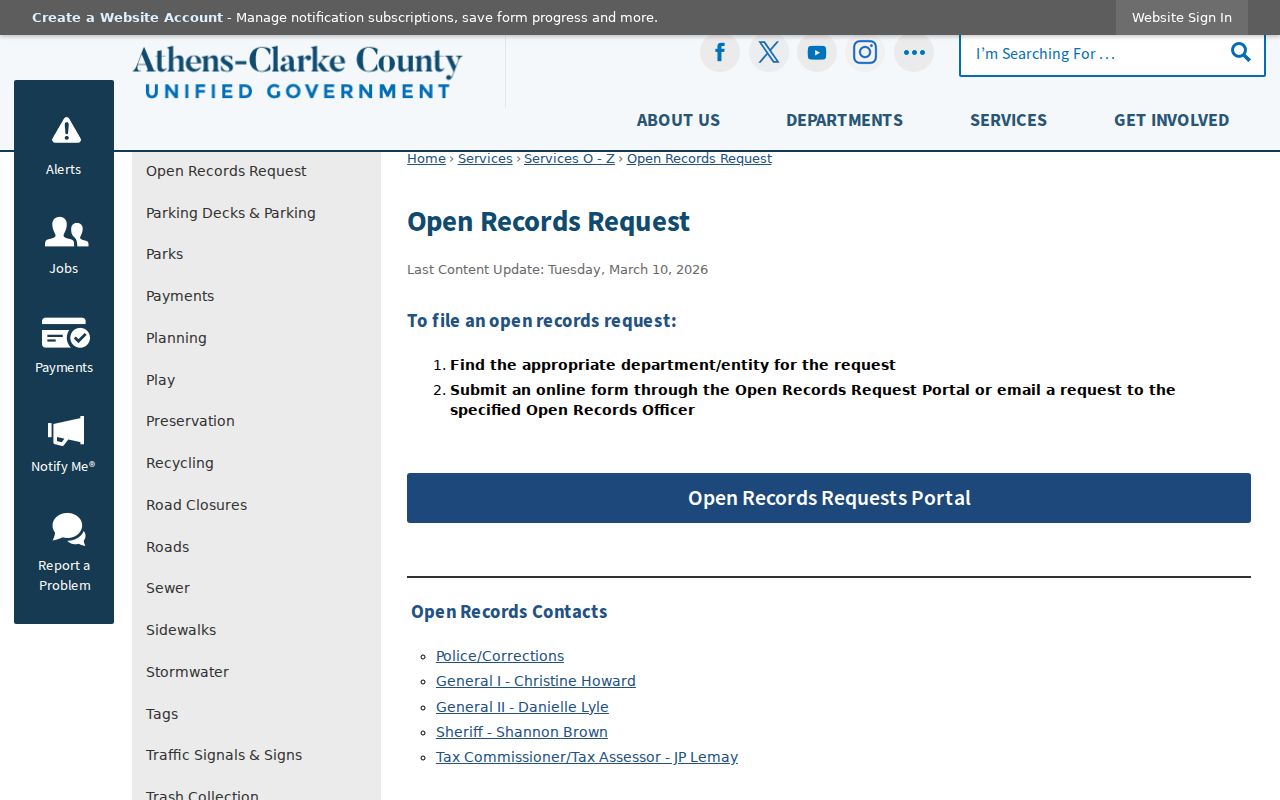
That source-linked channel is for police and corrections files, not the full court docket.
The Athens Police Department
Because Athens and Clarke County have a consolidated government, the Athens police department appears under the ACCGov name. ACCPD creates incident narratives, accident reports, arrest reports, and related evidence records. It does not own the sheriff's custody file or the clerk's final disposition. Call 762-400-7000 for the published Police/Corrections records channel; fax requests may go to 706-613-3348.
ACCPD Police/Corrections Records
3035 Lexington Road
Athens, GA 30605
762-400-7000
GovQA and agency request channels
For Athens crime trends, use the official ACCPD annual-report index. The research did not support a current numeric trend table, so raw claims should not replace the published reports.
The report year and matching population base matter when comparing Athens totals.
ACCPD or CCSO Athens Records
ACCPD owns the police narrative. The Clarke County Sheriff's Office owns the booking and custody record. That split is easy to miss because both serve the consolidated area. If an Athens arrest appears in the sheriff report, note the arresting-agency label, booking date, MID number, police case number, listed court, bond field, and warrant number.
| Question | Start Here |
|---|---|
| What did police report? | ACCPD report request |
| Was the person booked? | Clarke sheriff jail reports |
| What charge was filed? | Clarke court clerk |
| How did the case end? | Final court disposition |
Neither an arrest label nor a bond entry proves guilt. Both are snapshots that can change after prosecutor and court review.
Arrests and Bookings in Athens
Athens does not publish a separate verified city arrest blotter. The official route is the Clarke sheriff's seven-day arrest report and current-inmate list. The seven-day feed states that bookings appear after a 24-hour delay, refresh every 15 minutes after that, and leave the online report after seven days. Search the agency label for ACCPD and retain both the police case number and sheriff MID.
Once the listing disappears, request the sheriff booking record and the underlying ACCPD report. For the later charge and outcome, use the court file. The dedicated Clarke arrest history page covers the roster fields and county request paths in more depth.
Record trace: ACCPD incident › Clarke sheriff booking › prosecutor review › clerk case file.
Athens MID and Case Numbers
An MID number identifies the person within the sheriff's booking system. A police case number points to the ACCPD incident file. A court case number identifies the litigation record after charges reach a clerk. Carrying all three forward prevents a clerk or records officer from searching the wrong system.
- Police case number
- ACCPD identifier for the incident or agency report.
- MID
- Sheriff identifier tied to booking and custody records.
- Court jurisdiction
- The court named in the booking output, useful for routing but not proof of final filing.
- Disposition
- The court's recorded outcome, such as dismissal, plea, acquittal, or conviction.
Note: A shared name and similar birth year do not establish identity; compare official identifiers and certified court records.
Athens Municipal Court Records
Athens-Clarke Municipal Court handles city ordinances, traffic citations, and specified state-law matters. Fine payment is not a public docket search. The clerk counter or phone channel is the fallback for a citation, appearance date, plea, or disposition record.
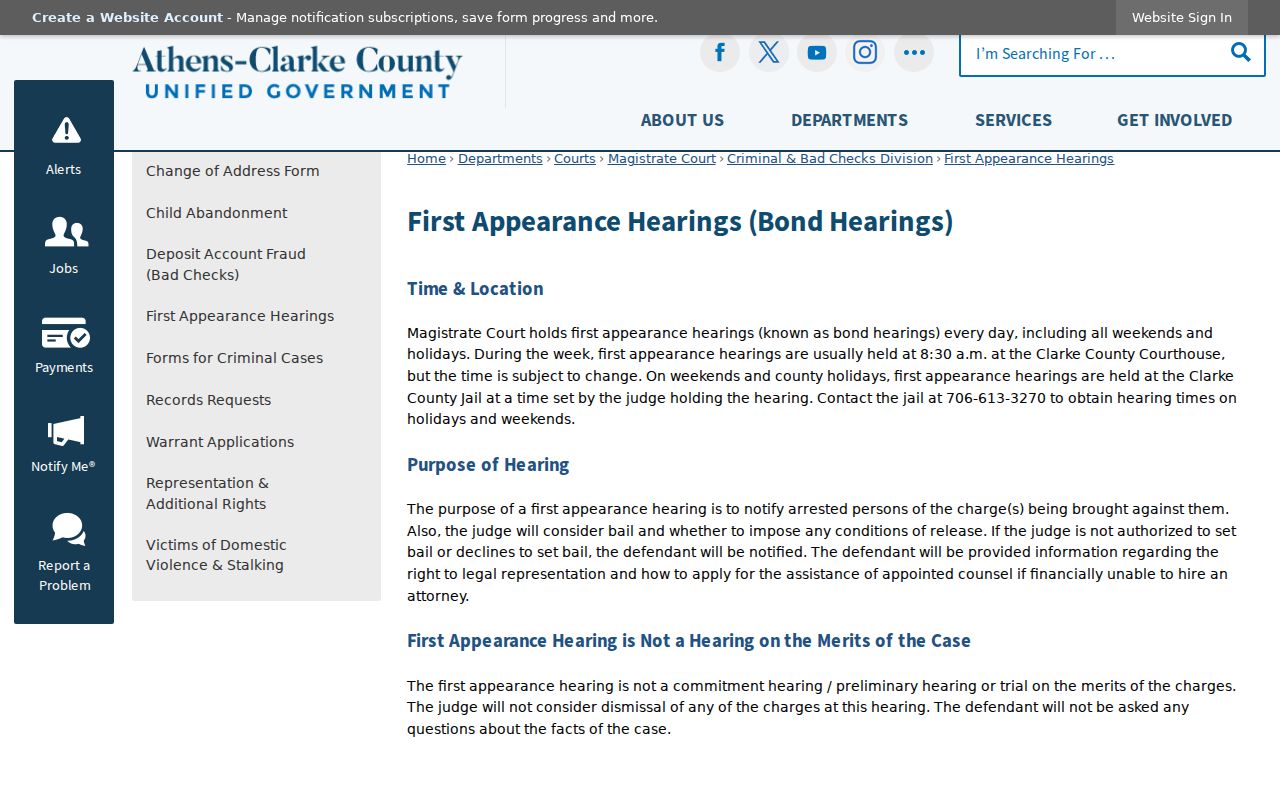
The court page helps distinguish city-level files from felony and stand-alone misdemeanor cases.
| Court Name | Athens-Clarke County Municipal Court |
|---|---|
| Case Types Heard | Ordinances, traffic, and specified state-law matters |
| Case Lookup Channel | Clerk counter or phone; no verified full public case portal |
| What the Docket Shows | Citation, appearances, pleas, orders, and disposition as maintained |
| Copies & Fees | Confirm format, availability, and current cost with the clerk |
Athens Citations and Felony Courts
A city citation can produce a Municipal Court failure-to-appear issue even when a Superior or State Court search is blank. A felony arising in Athens does not remain in Municipal Court. Superior Court handles felonies in the Western Judicial Circuit, while State Court generally handles stand-alone misdemeanors and traffic within its authority.
The second official Municipal Court access page provides the live city court channel.
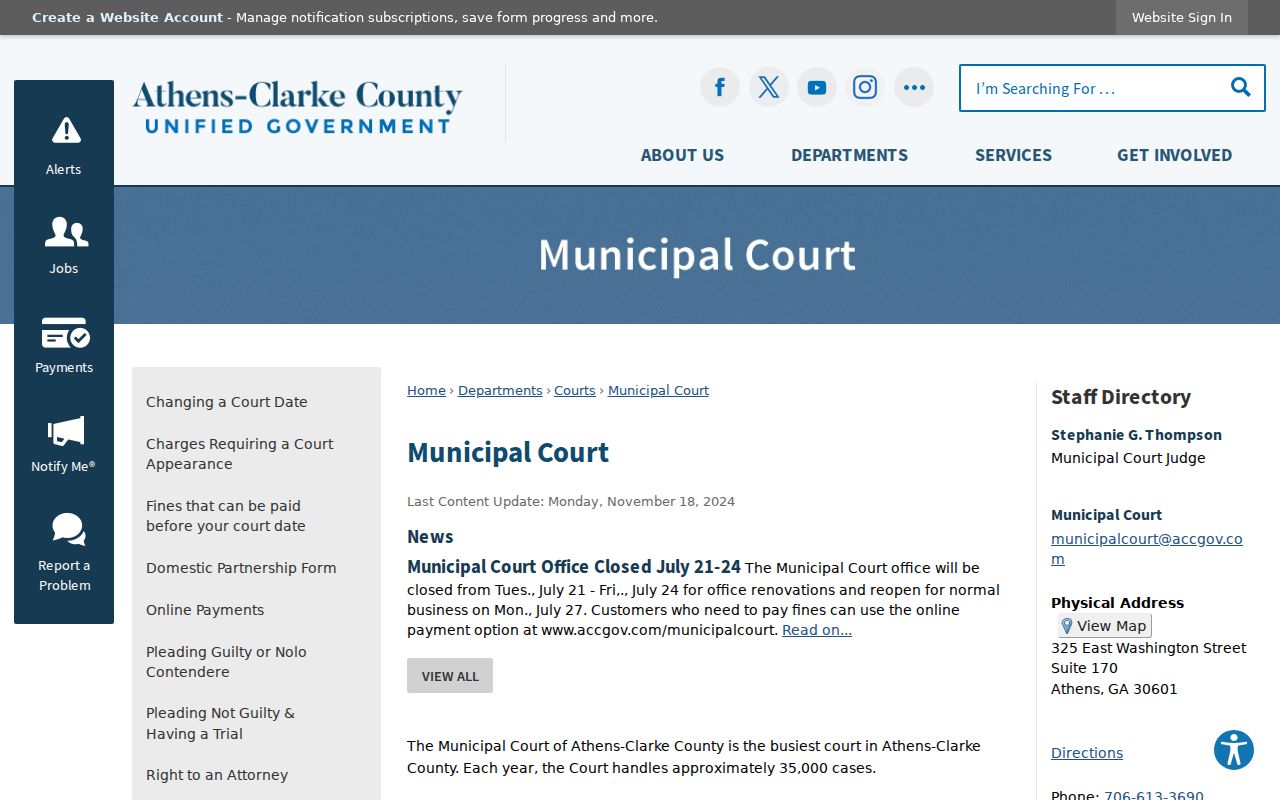
Use the citation heading and issuing agency to select the right clerk before relying on a no-result response.
Failure to appear: Contact the issuing court directly. Do not rely on the absence of a public warrant list to assume the matter is clear.
Where Athens Records End Up
An Athens event can generate several records. ACCPD writes the agency report. The sheriff adds booking and custody data if the person enters the Clarke jail. A prosecutor decides what to file, the proper clerk maintains the case, and reporting agencies send eligible arrest and disposition events to the Georgia Bureau of Investigation's Georgia Crime Information Center.
Record flow: Athens ACCPD › Clarke County Courts › GBI/GCIC.
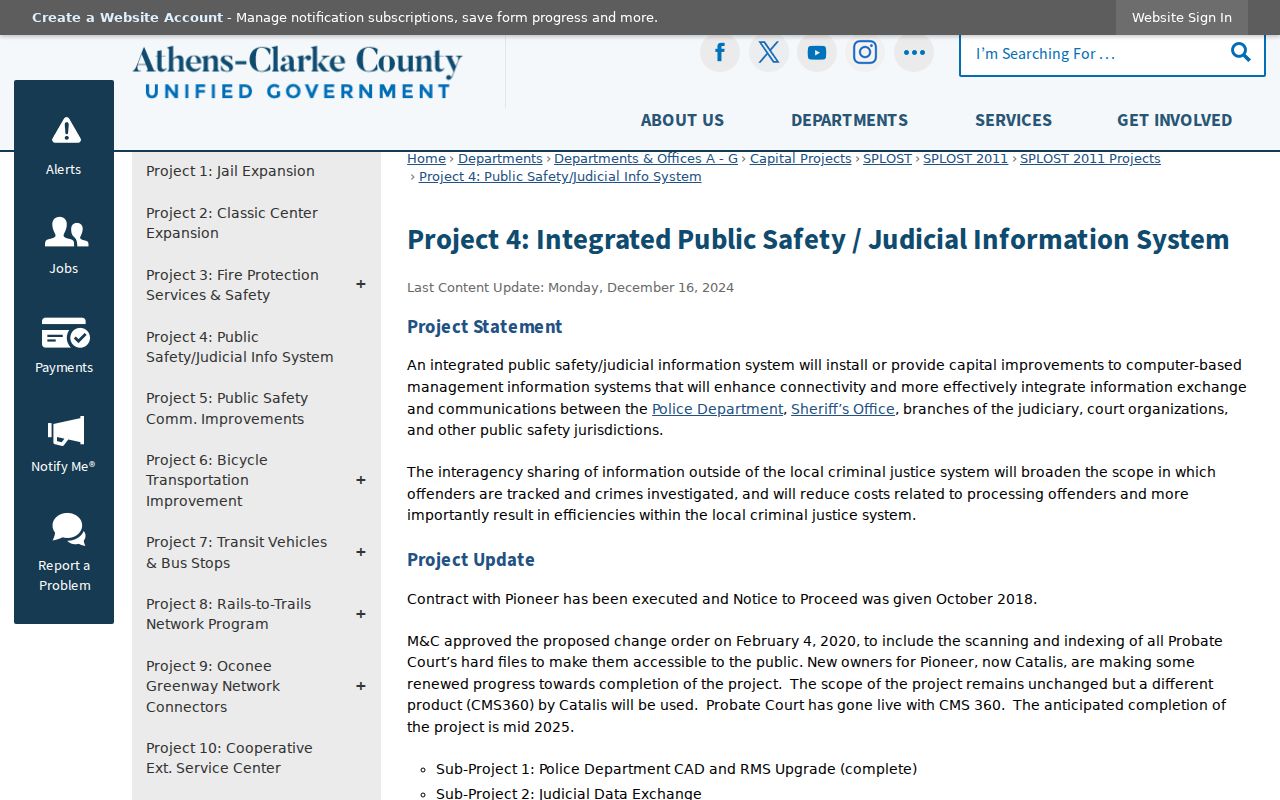
The county's integrated public-safety and judicial information project links agency work, but it did not create one public all-record search. The official project page documents that local integration.
For a complete trace, compare the city report, county booking, and clerk disposition rather than expecting one interface to contain all three.
Athens Has No Separate Blotter
No verified official Athens police arrest blotter or mobile records app was found. Browser searches should therefore begin with ACCPD GovQA for the agency report and the Clarke sheriff reports for booking. App-store results from other cities named Athens are not valid local sources.
This gap makes dates and identifiers vital. The sheriff's seven-day report is designed for recent bookings and drops entries after its short display period. GovQA can reach an existing police file after the public list is gone, while the clerk can supply a later court disposition. If the arresting-agency label is not ACCPD, use that label to redirect the report request. Athens consolidation puts police pages under ACCGov, but it does not turn every county record into a police record.
Athens Bond Fields Are Snapshots
Bond, release, charge, and court fields in a booking entry describe the record at that moment. Charges can be amended or declined. Bond can change. A transfer or release ends the current-custody entry but does not resolve the court case. The final court file is the best source for what was prosecuted and how it ended.
When an outcome is missing from a personal GCIC history, obtain a certified clerk disposition and compare the identity and arrest-cycle details. That is more reliable than inferring an outcome from an old Athens booking page.
Read the first-charge warning on the current-inmate output as well. A single displayed charge may not be the whole booking. Ask the sheriff for an official booking record if the complete charge set matters, then compare it with the prosecutor's filed accusation or indictment. Release status answers only whether custody continued at the time of the update. It does not tell the reader whether a charge was dismissed, reduced, tried, or resolved by plea.
An older Athens arrest can also outlive the public seven-day window. Search the court by approximate filing year and case identifier, or submit a narrow records request to the creating agency. If the court has no filing, ask whether the prosecutor declined the matter or whether the search went to the wrong jurisdiction. Do not turn silence in one system into a claimed outcome.
Public Access Rules for Athens Records
City police and administrative records are governed by the Georgia Open Records Act, while court records are requested from the clerk that maintains them. An agency may redact protected people, active-investigation material, and other exempt content. A narrow request should state the agency, incident date, location, known identifier, desired record, and preferred format.
Key Statutes:
Georgia Open Records Act, O.C.G.A. §§ 50-18-70 through 50-18-77 gives the public a route to existing government records, subject to exemptions and lawful fees.
O.C.G.A. § 35-3-34 governs dissemination of Georgia criminal-history information.
O.C.G.A. § 35-3-37 governs correction and restriction of eligible Georgia records.
Ask for rolling production and a cost estimate if an Athens request covers many files. Court copies and police reports remain different requests.